
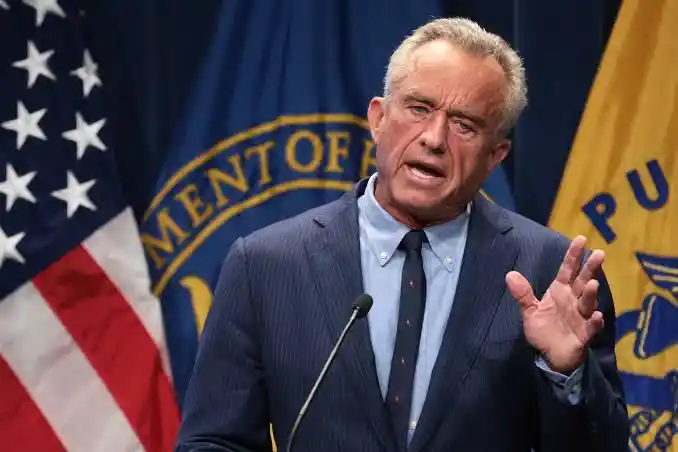
The Make America Healthy Again movement, widely known as MAHA, entered the national conversation with an ambitious promise: to confront America’s chronic health problems by changing the way the country approaches food, nutrition, environmental exposures and preventive health.
Led politically by Health and Human Services Secretary Robert F. Kennedy Jr. under President Donald Trump, the movement has emphasized concerns about processed foods, artificial food dyes, childhood chronic disease and other factors that supporters believe have contributed to declining health outcomes. The administration has promoted food-industry changes and presented MAHA as a major effort to reshape America’s approach to health.
But as the movement moves from campaign messaging into government policy, it is facing increasing scrutiny. Critics argue that some of the most visible MAHA initiatives have focused on issues such as synthetic food dyes while federal agencies responsible for food safety and public health have experienced staffing reductions and organizational changes. At the same time, major foodborne illness outbreaks have raised new questions about whether the country’s food-safety infrastructure has enough resources to identify and respond to threats quickly.
The debate has become particularly significant because the goal of improving America’s health depends on more than changing ingredients in packaged foods. It also involves making nutritious food affordable, maintaining strong food inspections, responding quickly to outbreaks and ensuring that public health agencies have the personnel and resources needed to protect consumers.
What Is the MAHA Movement?
The MAHA movement is built around the idea that America needs a different approach to chronic disease, particularly among children. Rather than concentrating primarily on treating illness after it develops, MAHA advocates a greater focus on nutrition, environmental factors, physical activity and other potential causes of poor health.
The U.S. Department of Health and Human Services describes MAHA as an effort to address the chronic disease epidemic and highlights initiatives involving food ingredients, nutrition and research. HHS says that a significant portion of the food and beverage industry has committed to removing petroleum-based artificial dyes and that the department has redirected funding toward combating childhood chronic disease.
The administration has also highlighted the removal of synthetic food dyes as an important achievement. The FDA is tracking voluntary industry commitments to remove petroleum-based certified colors from foods, with some companies working toward changes in products and school meals.
For supporters, these changes represent a shift toward addressing what they see as overlooked contributors to poor health. For critics, however, the emphasis on individual ingredients raises questions about whether the movement is addressing the broader systems that influence what Americans eat and whether they can afford healthier choices.
Food Safety Has Become a Major Test for MAHA
One of the biggest challenges facing the MAHA movement is the gap between its promise to improve Americans’ health and the practical realities of food safety.
Food safety is not limited to the ingredients listed on a package. It depends on a complex system involving farms, food processors, importers, laboratories, inspectors, state health departments and federal agencies. When that system fails to detect contamination quickly, illnesses can spread across multiple states before authorities identify the source.
That concern has become especially visible following a major 2026 cyclospora outbreak linked to contaminated iceberg lettuce. Reuters reported that the outbreak sickened 12,883 people across 21 states, resulted in 570 hospitalizations and was associated with two deaths. The outbreak was declared over in September after contaminated products were removed from the market.
The outbreak also highlighted problems with the capacity to track and investigate foodborne illness. Reuters reported that a backlog in Michigan was worsened by earlier federal funding cuts, while the FDA continued investigating how the parasite entered the food supply.
The Associated Press separately reported that FDA inspections of international food facilities have fallen significantly since 2019. The agency has struggled to meet congressional inspection targets, while staffing shortages, retirements, reorganizations and other challenges have reduced its ability to conduct traditional inspections.
These developments have placed food safety directly into the MAHA debate.
Why Federal Staffing Matters to Food Safety
Food inspections and outbreak investigations can be invisible to consumers when the system is functioning properly. People buy produce, meat and packaged foods without thinking about the number of workers involved in checking those products.
But when an outbreak occurs, the importance of that infrastructure becomes much more obvious.
Federal agencies need scientists, inspectors, epidemiologists, laboratory workers and other specialists to trace illnesses, identify contaminated products and determine where contamination occurred. Reducing the number of people available for those tasks can create challenges even when agencies continue operating.
The Trump administration and HHS have pursued major restructuring and staffing reductions. In 2025, Kennedy announced plans to eliminate thousands of positions across HHS, including approximately 3,500 FDA jobs and 2,400 CDC positions.
The FDA has continued to operate, and the administration has argued that restructuring can make government more efficient. But critics contend that reducing the workforce responsible for food safety and disease surveillance could weaken the government’s ability to respond to emerging threats.
That concern has become more difficult to dismiss when foodborne outbreaks require extensive investigation and coordination.
The Food Dye Debate Shows the Larger MAHA Divide
Artificial food dyes have become one of the clearest examples of MAHA’s approach to food policy.
Supporters argue that synthetic dyes offer little nutritional value and should be removed from foods, particularly products marketed to children. The administration has encouraged manufacturers to reformulate products, and the FDA is monitoring industry commitments to eliminate certain petroleum-based dyes.
There have already been significant industry responses. Research tracking food-industry actions found that the removal of synthetic dyes and their replacement with natural alternatives represented the vast majority of announced changes reviewed during the early stages of the MAHA initiative.
However, critics argue that changing food colors is only one piece of a much larger nutrition problem.
Removing artificial dyes does not automatically make a product nutritious. A brightly colored cereal can be reformulated with natural coloring while still containing substantial amounts of added sugar. Similarly, removing one controversial ingredient does not address issues such as portion sizes, overall dietary patterns, food marketing or the availability of affordable whole foods.
That distinction has become central to the criticism surrounding MAHA.
Healthy Food Is Also an Access Problem
One of the most complicated parts of America’s nutrition debate is that people do not make food choices in a vacuum.
Income, location, transportation, time, cooking facilities and food prices can all affect what people eat. Advising families to choose fresh vegetables, lean proteins and minimally processed foods is considerably easier when those foods are affordable and readily available.
This is why nutrition policy cannot be separated completely from food assistance programs.
Critics of the current direction of health policy argue that reductions or restrictions affecting food assistance could make it harder for low-income families to maintain a healthy diet. The Guardian reported that significant cuts and policy changes involving the Supplemental Nutrition Assistance Program have become part of the broader criticism of the MAHA agenda.
At the same time, the administration has argued that MAHA-aligned policies can encourage healthier purchasing decisions. The USDA’s MAHA initiatives include changes related to nutrition standards and SNAP waivers intended to support healthier food choices.
The disagreement illustrates an important challenge: encouraging healthy eating requires both education and access.
Can Voluntary Changes Transform the Food System?
Another question surrounding MAHA is whether voluntary commitments from food manufacturers can produce the kind of transformation the movement promises.
The administration has celebrated industry commitments to remove artificial dyes and other ingredients. HHS says that 40% of the U.S. food and beverage industry has committed to removing artificial dyes.
Voluntary reformulation can be faster than traditional legislation or regulation because companies can change products without waiting for lengthy rulemaking processes. It can also give manufacturers flexibility to find alternative ingredients.
But voluntary programs have limitations.
Companies may choose which products to reformulate and how quickly to make changes. Different manufacturers may adopt different standards, and consumers may have difficulty determining exactly what has changed.
This creates an ongoing debate over whether the government should rely primarily on voluntary industry commitments or establish mandatory standards that apply across the entire market.
MAHA’s Broader Challenge: Prevention Versus Infrastructure
At its core, the MAHA debate is about what it means to make Americans healthier.
There is broad agreement that nutrition matters. Diet, physical activity and other lifestyle factors can influence long-term health. The disagreement is about how government should address those problems and which interventions deserve the greatest attention.
Critics argue that the movement’s emphasis on specific ingredients can distract from larger structural issues. The Guardian reported criticism that MAHA has focused on highly visible targets such as food dyes while broader concerns involving food safety enforcement, food access and public health capacity remain unresolved.
Food safety is particularly important because it represents a different type of prevention. Preventing a foodborne illness outbreak is not primarily about convincing consumers to make better choices. It requires functioning surveillance systems, inspections, laboratories, traceability and rapid government response.
That means a comprehensive health agenda needs both individual-level and system-level solutions.
What Supporters Say About MAHA
Despite the criticism, MAHA has achieved tangible policy changes.
The movement has pushed food dyes into the national spotlight and encouraged manufacturers to reformulate products. Several states have also adopted or considered legislation addressing dyes and other food ingredients. The National Conference of State Legislatures reported that MAHA priorities influenced numerous state-level measures involving food dyes, SNAP restrictions, nutrition education and ultraprocessed foods.
Supporters therefore argue that MAHA is changing the conversation around chronic disease and forcing policymakers and companies to reconsider ingredients that previously received relatively little public attention.
The administration also maintains that its broader strategy is designed to address childhood chronic disease through research, incentive changes, private-sector collaboration and public awareness.
Those goals are significant, particularly in a country facing high rates of chronic disease.
The controversy is not necessarily about whether Americans should become healthier. It is about whether the policies being used are comprehensive enough to achieve that goal.
Why Food Safety Could Define the Movement’s Legacy
The foodborne illness outbreaks and questions surrounding federal capacity create an important test for MAHA.
If the movement succeeds in encouraging healthier food formulations but fails to maintain strong systems for preventing and responding to contamination, critics will argue that it addressed the visible parts of America’s food problems while neglecting less visible but equally important risks.
On the other hand, if federal agencies can rebuild capacity, improve outbreak detection and strengthen food-safety systems while continuing to encourage healthier products, MAHA supporters could point to a broader definition of success.
Recent events demonstrate why both areas matter.
Consumers need food that is nutritious, but they also need food that is safe. Families need information about healthy diets, but they also need reasonable access to affordable food. Companies can reformulate products, but government agencies still need enough resources to monitor the food supply.
A successful public-health strategy ultimately has to address all of these issues at the same time.
The Fight for a Healthier America Is Bigger Than Ingredients
The MAHA movement has succeeded in making food policy a major part of America’s health conversation. Artificial dyes, ultraprocessed foods, childhood nutrition and chronic disease are now receiving significant political attention.
But public health is rarely transformed by one policy or one ingredient.
The continuing debate over MAHA shows that creating a healthier America requires a combination of nutrition, affordability, food safety, scientific research, effective regulation and functioning public institutions.
The recent foodborne illness outbreaks have added urgency to that conversation. They demonstrate that a healthy food system is not simply one in which products contain fewer controversial ingredients. It is also a system capable of protecting people from contamination and responding quickly when something goes wrong.
As MAHA continues to shape health and food policy, its long-term success will likely be judged not only by how many companies remove artificial dyes, but by whether Americans actually have greater access to safe, nutritious and affordable food.
That is a much larger challenge, and it is one that cannot be solved by reformulating a single ingredient.
Citation Section
The Guardian — “Food-borne illnesses, funding cuts and layoffs: Maha movement’s glaring limitations are now showing”
Read the Guardian article
U.S. Department of Health and Human Services — Make America Healthy Again
Read HHS’s MAHA overview
U.S. Food and Drug Administration — Tracking Industry Pledges to Remove Petroleum-Based Food Dyes
Read the FDA update
Reuters — U.S. declares end of largest recorded cyclosporiasis outbreak
Read the Reuters report
Associated Press — Cyclospora outbreak highlights declining FDA foreign inspections
Read the Associated Press report
National Conference of State Legislatures — MAHA Priorities and State Food Policy
Read the NCSL analysis
Leave a Reply