
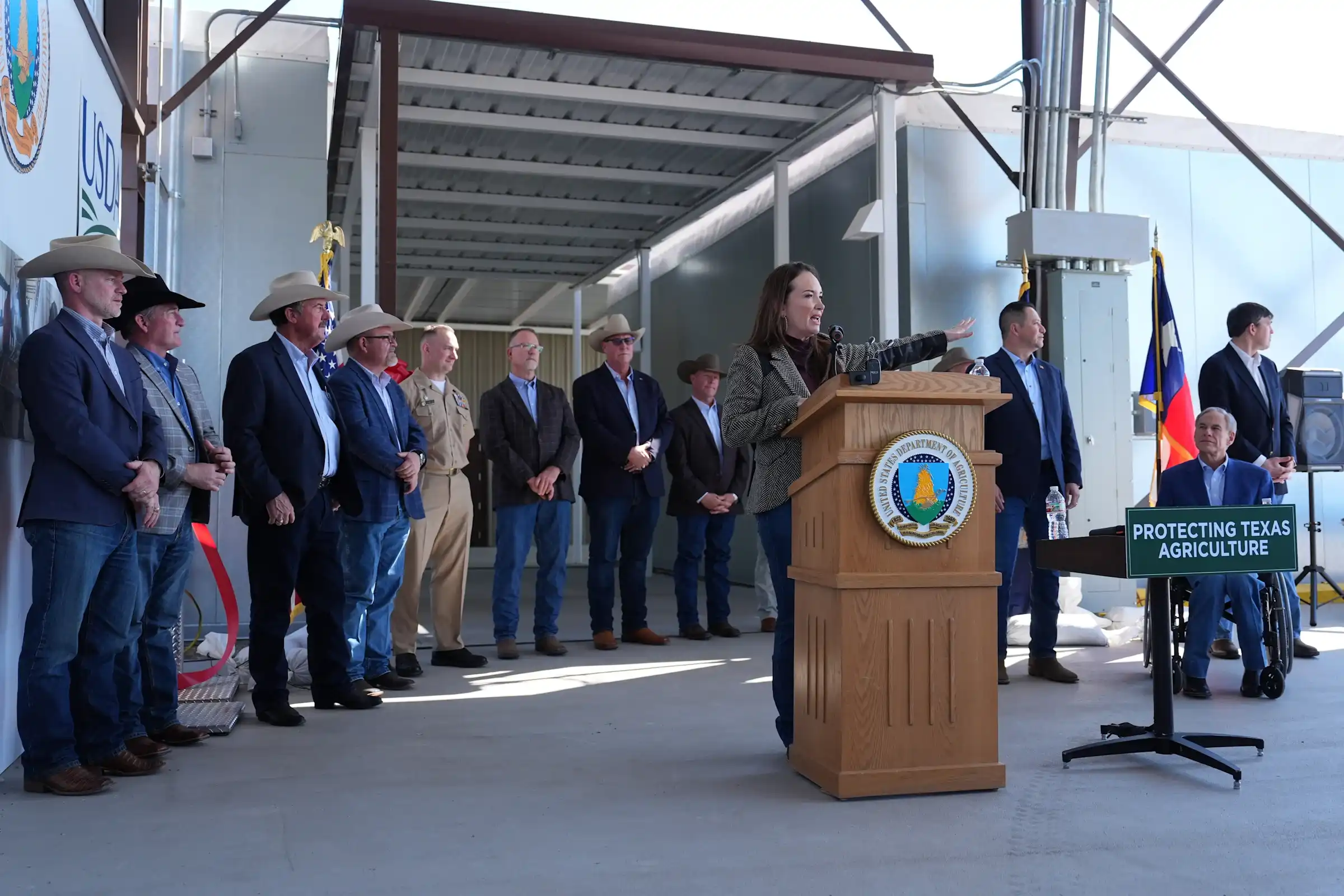
A newly emerging agricultural crisis is adding pressure to already high beef prices in the United States. A dangerous parasite known as the New World screwworm, often described as a “flesh-eating pest,” has been detected in cattle in the southern United States after decades of absence. The outbreak is now raising concerns about livestock health, supply chain stability, and the political promise of lowering grocery prices, including beef costs that remain a major economic issue for American households.
The situation has quickly become both a public health monitoring priority and a major economic risk for the cattle industry. Officials warn that if the parasite spreads further, it could significantly reduce cattle supply, disrupt ranching operations, and push beef prices even higher at a time when they are already near historic levels.
What Is the New World Screwworm?
The New World screwworm is a parasitic fly whose larvae feed on the living tissue of warm-blooded animals. Unlike typical maggots that consume dead matter, screwworm larvae invade open wounds and begin feeding on healthy flesh, causing severe infections, deep tissue damage, and in untreated cases, death in livestock.
The pest was once considered eradicated in the United States after a massive mid-20th-century eradication campaign that used sterile insect techniques to eliminate breeding populations. However, recent reports confirm that the parasite has reappeared in cattle in Texas, marking the first confirmed cases in decades.
According to federal agriculture authorities, the infestation was detected in a young calf in southern Texas, triggering emergency containment measures, quarantine zones, and rapid surveillance efforts across nearby livestock regions.
Why the Screwworm Is a Serious Threat to Cattle
The danger of the screwworm lies not only in its biological behavior but also in its potential to spread quickly across livestock populations. Even minor wounds in animals, such as insect bites or small cuts from routine handling, can attract female flies that lay eggs directly into exposed tissue.
Once hatched, the larvae burrow deeper into the wound, feeding continuously and expanding the injury. This process can lead to severe pain, infection, and in many cases, death if untreated. Beyond individual animal suffering, outbreaks can rapidly affect entire herds if not contained early.
Veterinary experts warn that the parasite does not simply weaken livestock health—it directly reduces the number of cattle that reach the food supply chain. This makes it a critical issue for beef production and market stability.
How the Outbreak Connects to Beef Prices
The timing of the screwworm outbreak is especially sensitive because the U.S. cattle industry is already under pressure from multiple economic factors. Ranchers have been dealing with drought conditions, high feed costs, and historically low herd numbers, all of which have contributed to elevated beef prices nationwide.
With the detection of screwworm in Texas cattle, market analysts are increasingly concerned that supply could tighten further. Even a limited outbreak can lead to quarantine restrictions, livestock movement delays, and higher production costs for ranchers who must inspect and treat animals more frequently.
Reports from agricultural economists suggest that while immediate retail price changes may be limited, longer-term impacts could be significant if the infestation spreads beyond initial containment zones.
In simple terms, fewer healthy cattle reaching slaughter means less beef entering the market, which typically results in higher prices for consumers.
Government Response and Containment Efforts
Federal and state agricultural agencies have moved quickly to contain the outbreak. The U.S. Department of Agriculture has activated emergency response protocols that include quarantine zones around affected areas, livestock inspections, and restrictions on animal movement.
One of the key strategies being deployed is the use of sterile insect techniques, a method previously used to eradicate screwworms in the United States decades ago. This involves releasing sterilized male flies into the environment to disrupt reproduction cycles and gradually eliminate the population.
Authorities are also increasing surveillance along the U.S.–Mexico border, where the pest has been spreading northward for several years. Officials emphasize that early detection is critical to preventing a large-scale outbreak that could threaten national livestock production.
Economic Risks for the Beef Industry
The U.S. beef industry is one of the largest agricultural sectors in the country, valued at more than $100 billion annually. Any disruption to cattle supply chains can have widespread effects, not only for ranchers but also for grocery prices and restaurant costs.
Analysts warn that if screwworm cases expand, ranchers could face increased veterinary expenses, higher mortality rates in herds, and logistical disruptions due to quarantine zones. These factors collectively reduce supply efficiency and increase production costs.
At the same time, consumer demand for beef remains strong, which means even small reductions in supply can create upward pressure on prices. This imbalance is one of the main reasons economists are closely monitoring the outbreak’s development.
Some experts argue that the long-term risk is not just price inflation but potential instability in regional cattle markets if outbreaks persist or spread across multiple states.
Political Implications and Public Debate
The screwworm outbreak has also entered the political conversation, particularly because of its potential impact on consumer prices. Beef costs are a sensitive economic indicator, often tied to broader debates about inflation and food affordability.
As policymakers emphasize efforts to reduce grocery prices, the emergence of a pest that threatens livestock supply presents a challenging counterforce. Even though the outbreak is still limited, it has already become part of discussions about agricultural policy, border control, and food system resilience.
Public reactions have been mixed, with ranching communities expressing concern about long-term damage to herds, while government officials attempt to reassure consumers that containment efforts are underway.
Could This Affect Grocery Store Prices Immediately?
Despite rising concern, experts suggest that grocery store prices are unlikely to change immediately. Cattle take time to raise, and retail beef prices typically reflect longer production cycles rather than short-term shocks.
However, if the outbreak expands and leads to significant herd losses or sustained quarantine measures, the impact could eventually reach consumers. This would likely appear first in wholesale beef prices before filtering down to supermarkets and restaurants.
In other words, the economic effects—if they occur—would be gradual but potentially long-lasting.
Why This Pest Was So Feared in the First Place
The New World screwworm was once one of the most destructive parasites in livestock history. Before its eradication in the United States, it caused massive economic losses across the cattle industry, with ranchers suffering significant herd damage and treatment costs.
Its return is especially alarming because it had been absent for decades, and modern livestock systems were not expecting to deal with it at scale. The reappearance highlights how quickly agricultural systems can become vulnerable when biological threats cross borders or re-emerge in previously controlled environments.
Conclusion
The emergence of the New World screwworm in U.S. cattle marks a serious warning sign for both the agricultural sector and the broader economy. While containment efforts are underway, the potential risks to livestock health, supply chains, and beef prices are significant enough to draw national attention.
For now, authorities remain focused on limiting the spread and preventing a larger outbreak. But the situation underscores a broader reality: even a single biological threat can ripple through the food system, affecting farmers, markets, and consumers alike.
As the investigation continues, the central question remains whether containment efforts will succeed in preventing a repeat of history—or whether this flesh-eating pest will once again reshape America’s beef industry.
Citation Links Section
- Reuters – US races to contain screwworm outbreak
- The Guardian – Flesh-eating parasite detected in Texas cattle
- AP / Washington Post – Screwworm reappears in US cattle
- Forbes – Screwworm impact on beef prices
- Reuters / Investing – Screwworm and beef price risk analysis
- Dallas Fed Economic Analysis on Beef Prices and Screwworm Risk
Leave a Reply